
Precision fluid and gas control systems require reliable shutoff mechanisms capable of operating seamlessly under high pressure, variable temperatures, and corrosive conditions. In processing plants, instrument air lines, and sampling networks, maintaining leak-free performance is vital for equipment safety and process accuracy. Instrumentation ball valves solve these operational needs by utilizing a quarter-turn rotational mechanism to regulate or completely stop fluid flow.
Understanding what an instrumentation ball valve is, how it operates, its mechanical features, and its diverse industrial applications allows piping design engineers to select the proper flow control components for critical process systems.
What Is an Instrumentation Ball Valve?
An instrumentation ball valve is a precision-engineered quarter-turn valve designed to control liquid or gas flow within process instrumentation, pressure measurement, and sampling loops. The valve features a spherical closure element (a ball with a central bore) positioned inside the valve body.
When the handle is turned 90 degrees, the internal bore aligns parallel to the fluid passage, allowing unrestricted flow. Rotating the handle back 90 degrees places the solid wall of the ball perpendicular to the flow path, creating a tight, positive shutoff. Manufactured primarily from high-grade Stainless Steel 316 (SS316), these valves offer high corrosion resistance, long mechanical service life, and reliable bi-directional flow control.
What Are the Key Design Features of Instrumentation Ball Valves?
Instrumentation ball valves incorporate specialized engineering elements to ensure low operating torque, zero seat leakage, and broad system compatibility.
1. Body Construction & Panel Mounting
- Three-Piece Body Design: The three-piece structural design allows easy inline servicing and maintenance without fully dismantling adjacent piping connections.
- Panel Mountable Capability: Built-in panel nuts allow secure mounting on control panels, instrument enclosures, and skid assemblies.
2. High-Performance Seat Materials & Temperature Ratings
The choice of ball seat material dictates the allowable pressure and temperature envelope of the valve:
- PTFE Seats: Suitable for general process lines, providing tight sealing up to 2500 psig (170 bar) at cold working pressure (CWP).
- PEEK Seats: Engineered for demanding high-pressure service, supporting pressures up to 6000 psig (413 bar) at CWP.
- Operating Temperature Range: Designed to function reliably between -50°C and 160°C.
3. End Connection Configurations
To accommodate various piping interfaces, instrumentation ball valves support multiple end connection types:
- YDB ODT Tube Fittings (featuring front and back ferrules with ferrule nuts for secure tube grip)
- Male and Female NPT (National Pipe Thread) connections
- BSPT (British Standard Pipe Tapered) pipe threads
4. Traceability & Testing Compliance
- Heat Code Traceability: Stainless Steel 316 components are heat code traceable directly to certified material test reports (MTRs).
- Standard Factory Testing: Every valve undergoes factory testing with nitrogen gas at 2000 psig (138 bar) to verify seat and stem packing seal integrity.
- Optional Hydrostatic Testing: Performed with de-ionized water at 1.5 times the maximum rated working pressure upon request.
Materials of Construction (MOC)
The mechanical performance of an instrumentation ball valve relies on high-grade materials selected for chemical compatibility and pressure containment.
| Component Part | Material of Construction |
| Valve Body, Stem & Ball | Stainless Steel 316 (SS316) |
| Handle & Lock Screw | Phenolic Nylon Handle with SS Lock Screw |
| Valve Seat Options | PEEK or PTFE |
| Stem & Connector Seals | Viton O-Rings with PTFE Backup Washers |
| Tube Fitting Ferrules | SS316 Front & Back Ferrules with SS316 Nut |
| Internal Springs | Stainless Steel |
Where Are Instrumentation Ball Valves Used Across Industrial Sectors?
Because of their versatile configurations, pressure ratings, and bi-directional flow design, instrumentation ball valves are installed across numerous critical sectors:
Oil & Gas Industry
Used for controlling hydrocarbon fluids, isolating pressure measurement instruments, and managing fluid sampling lines in upstream, midstream, and downstream installations.
Chemical & Petrochemical Plants
Employed in chemical dosing, blending systems, reagent distribution, and fluid sampling loops handling corrosive media.
Power Generation Facilities
Installed in steam systems, high-pressure boiler instrumentation lines, water sampling loops, and turbine pressure monitoring circuits.
Water & Wastewater Treatment
Utilized for precise flow regulation in chemical dosing lines, water filtration networks, and automated fluid sampling points.
Pharmaceutical & Cleanroom Units
Facilitates sterile fluid handling and pressure monitoring within controlled pharmaceutical processing systems.
Mining & Metal Processing
Controls slurry transport lines, reagent dosing systems, and high-pressure process monitoring loops.
Compressed Natural Gas (CNG) & High-Pressure Service
Applied in CNG dispensing skids, high-pressure instrument air lines, and general plant utility lines handling pressurized gases.
Frequently Asked Questions (FAQs)
1. What is the difference between a PTFE seat and a PEEK seat in an instrumentation ball valve?
A PTFE seat supports pressure ratings up to 2500 psig (170 bar) for standard service, while a PEEK seat provides enhanced mechanical strength for high-pressure applications up to 6000 psig (413 bar).
2. What factory tests are performed on instrumentation ball valves?
Every valve is standard factory-tested with nitrogen gas at 2000 psig (138 bar) to detect any seat or packing leaks. Optional hydrostatic testing can be performed using de-ionized water at 1.5 times the working pressure.
3. Are instrumentation ball valves bi-directional?
Yes. These valves feature bi-directional flow capability, allowing fluid or gas to enter and shut off cleanly from either direction across the valve ports.
4. Can instrumentation ball valves be mounted directly onto panels?
Yes. Designed with panel nuts, three-piece body configurations can be panel-mounted directly into control cabinets, process skids, and system panels.
5. What tube end connections are available for these valves?
Instrumentation ball valves offer YDB ODT double-ferrule tube fittings, as well as Male/Female NPT and BSPT threaded end connections.
Quality Manufacturing & Engineering Specifications
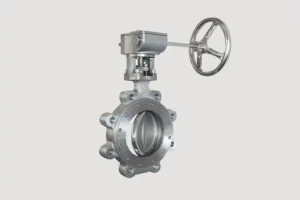
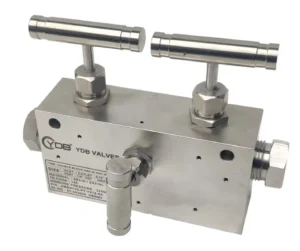
Delivering high-integrity flow control products requires rigorous quality management and verified material standards. YDB VALVES LLP manufactures a complete range of instrumentation components—including instrumentation ball valves, check valves, manifold valves, relief valves, and needle valves—alongside double block & bleed, high-pressure needle, butterfly, cast steel, and forged steel valve ranges.
Every valve is precision-engineered, fully factory-tested, and supported by complete technical documentation, installation guidance, engineering drawings, and Material Test Certificates (MTCs).
- Head Office Address: YDB VALVES LLP, Y-21, Khan Real Industrial Estate, N. H. 08, Pelhar, Vasai Phata, Vasai East, Palghar – 401208, Maharashtra, INDIA
- Request Information: Submit your system parameters to Request a Quote.
- Email: info@ydbvalves.com
- Contact Phone: +91-80 8701 0270
- Product Specifications: Download the catalogue for complete dimensional drawings and technical parameters.
For custom flow control and high-pressure instrument tubing applications, partner with a certified instrumentation ball valve manufacturer in india to select engineered valve assemblies tailored to your operational specifications.