Chemical treatment and fluid monitoring require controlled introduction of agents into high-pressure pipelines. In refinery, petrochemical, power generation, and offshore installations, injecting de-icing, de-waxing, or anti-foaming chemicals directly into continuous process streams requires specialized equipment. Standard injection quills and integrated injection quill double block and bleed (DBB) valves serve as primary interfaces for these operations, yet their structural configurations, safety mechanisms, and isolation capabilities differ significantly.
Understanding the distinctions between a standard injection quill and an injection quill DBB valve helps piping engineers select appropriate components to maintain operational safety, prevent backflow, and ensure system integrity.
What Is a Normal Injection Quill?
A normal injection quill is a specialized fitting designed to deliver chemicals or liquid additives into the center of a process pipeline. The primary component is an extended probe or nozzle—often featuring a standard 3mm diameter orifice—that extends into the main flow stream to ensure uniform mixing and prevent chemical erosion along the interior pipe wall.
In a standard setup, the quill itself acts primarily as an injection nozzle. To isolate the injection line from the main process pipe during maintenance or servicing, separate external block valves must be installed upstream of the quill assembly. While effective for basic fluid delivery, standard injection quills rely on external piping joints and separate isolation valves to contain line pressure.
What Is an Injection Quill DBB Valve?
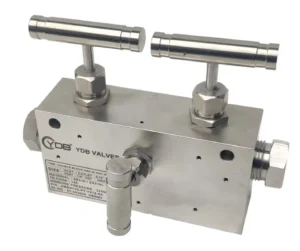
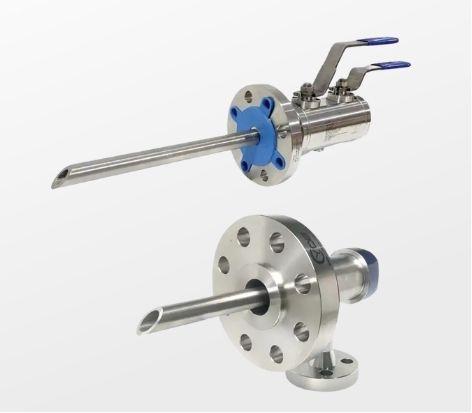
An injection quill DBB valve integrates the chemical delivery probe directly with a double block and bleed valve assembly inside a single compact housing. Available across single-piece body DBB, modular, monoflange, and manifold designs, this assembly combines primary isolation, secondary isolation, and an intermediate bleed function directly at the injection point.
The injection quill extends directly from the valve body into the pipeline flow stream, delivering fluid under full system operating pressures and temperatures. Built-in features—such as fire-safe construction, anti-blowout stems, and leak-proof seal design—ensure reliable fluid control while minimizing potential leak paths and weight on small-bore piping connections.
Key Differences Between Normal Injection Quills and Injection Quill DBB Valves
While both designs serve to introduce liquid media into pipeline networks, their structural, safety, and mechanical characteristics differ across several core operational areas.
1. Isolation Capability and Pressure Venting
- Normal Injection Quill: Offers no internal fluid isolation. Primary shut-off relies entirely on external valves mounted along the incoming chemical line. Trapped pressure cannot be vented directly at the quill connection point without external bleed fittings.
- Injection Quill DBB Valve: Contains built-in primary and secondary block elements with an integrated central bleed valve. Closing both block valves isolates the process pressure, while the bleed valve safely vents trapped pressure between the seats, allowing technicians to verify seal integrity before servicing.
2. Leak Paths and Structural Integrity
- Normal Injection Quill: Requires multiple threaded, welded, or flanged joints to connect separate isolation valves, check valves, and fittings to the quill body. Every joint represents a potential point for fugitive emissions or structural stress.
- Injection Quill DBB Valve: Features a compact single-body architecture (such as one-piece forged barstock or socket-welded constructions). Consolidating isolation and injection into a single body drastically reduces total weight and eliminates intermediate joint leak paths.
3. Backflow Prevention and Fluid Control
- Normal Injection Quill: May require separate, external check valves installed along the feed line to prevent process fluids from backflowing into the chemical supply tank.
- Injection Quill DBB Valve: Accommodates high-integrity, spring-loaded non-return check valves fitted internally or externally. Operating with a standard cracking pressure of 10 psig (with custom options available), the poppet mechanism opens only during active chemical injection, preventing process media backflow out of the line.
Structural Construction Options
Manufacturing injection quill assemblies for demanding industrial settings involves flexible construction methods to accommodate variable pipe geometries, pressure classes, and corrosive media:
- One-Piece Forging / Barstock: The outlet flange and probe are machined from a single solid forging or forged barstock, providing high structural strength.
- Screwed and Torqued Assembly: The probe is machined from forged barstock, screwed into the outlet flange under torque, and can be seam-welded for added joint strength.
- Socket Welded Assembly: The probe is socket-welded directly into the outlet flange connection for permanent alignment.
Custom probe lengths (L) and nozzle configurations are manufactured to meet specific pipe diameters and process flow requirements.
Primary Uses and Applications Across Industrial Sectors
Both valve types are utilized across continuous processing operations, though injection quill DBB valves are preferred in high-pressure, hazardous, or tight-space installations.
Oil & Gas Industry
Used on offshore platforms and high-pressure transmission pipelines for injecting de-waxing, anti-foaming, or hydrate-inhibiting agents directly into hydrocarbon streams. The DBB configuration allows safe depressurization during maintenance.
Chemical and Petrochemical Processing
Installed in chemical plants handling hazardous, volatile, or highly corrosive fluids. The integrated double isolation prevents toxic leakages and chemical contamination during routine injection system checks.
Power Generation Facilities
Employed in thermal and hydro power plants to introduce conditioning chemicals into high-pressure boiler feedwater, steam loops, or cooling water circuits under elevated temperatures.
Marine & Shipbuilding Industry
Critical for onboard fluid management systems where space is restricted, allowing safe chemical dosing and line depressurization without adding heavy piping spools.
When to Choose an Injection Quill DBB Valve Over a Normal Quill
Selecting between a standalone quill and an integrated injection quill DBB valve depends on system pressure, fluid toxicity, space constraints, and safety requirements:
- Choose a Normal Injection Quill for low-pressure, non-hazardous fluid lines where external isolation valves are already present and space/weight limits are not restrictive.
- Choose an Injection Quill DBB Valve for high-pressure, high-temperature, or corrosive process lines where double positive isolation, zero fugitive emissions, reduced piping weight, and verifiable seat leakage testing are required.
Frequently Asked Questions (FAQs)
1. What is the main purpose of an injection quill?
An injection quill extends a chemical delivery nozzle into the center of a process pipe, ensuring proper mixing of injected fluids into the stream while protecting interior pipe walls from localized erosion or corrosion.
2. How does the non-return valve in an injection quill DBB valve function?
The non-return valve utilizes a spring-loaded poppet mechanism with a standard 10 psig cracking pressure. It opens only when active chemical injection pressure exceeds line pressure, preventing backflow into the chemical feed system.
3. Can an injection quill DBB valve be installed vertically?
Yes. Injection quill DBB valves are engineered for installation in both horizontal and vertical pipeline configurations.
4. What is the advantage of a single-piece body DBB design?
A single-piece body design integrates isolation, bleed, and injection functions into one forged structure, reducing overall assembly weight, installation time, and external leak paths.
5. How does sampling differ from chemical injection in these valve assemblies?
Chemical injection introduces external agents into the process line through a quill and non-return valve. Sampling uses an extended probe to safely extract process media samples at system pressure into an isolated cavity between the primary and secondary block valves.
Quality Manufacturing & Engineering Specifications
Delivering high-integrity flow control solutions for critical fluid processing requires strict manufacturing oversight and adherence to international design standards. YDB VALVES LLP designs and manufactures high-performance instrumentation components, double block and bleed assemblies, monoflange valves, ball valves, needle valves, butterfly valves, and cast/forged steel valves.
Products undergo comprehensive inspection and testing—including hydrostatic, pneumatic, fire-safe, and fugitive emission evaluations. Technical documentation, installation guidance, engineering drawings, and Material Test Certificates (MTCs) are provided with all deliveries.
- Head Office Address: YDB VALVES LLP, Y-21, Khan Real Industrial Estate, N. H. 08, Pelhar, Vasai Phata, Vasai East, Palghar – 401208, Maharashtra, INDIA
- Request Information: Request a Quote with your project specifications.
- Email: info@ydbvalves.com
- Contact Phone: +91-80 8701 0270
- Product Specifications: Download the catalogue for complete engineering dimensions and technical details.
To source specialized chemical injection and isolation hardware tailored to your pipeline pressure class, contact a certified injection quill dbb valve manufacturer in india for technical support and customized unit designs.