Why Ball Valve Design Matters in Pipelines
Pipeline systems operate under constant mechanical stress, pressure variation, and thermal movement. The choice of valve design directly affects long-term stability, operating torque, and sealing reliability. When evaluating ball valves for a pipeline, understanding the difference between floating and trunnion designs is essential for maintaining performance and minimizing operational risk.
Floating Ball Valve Design Explained
In a floating ball valve, the ball is supported by the valve seats and allowed a small degree of movement within the body. Line pressure pushes the ball downstream, creating a tight seal against the seat. This design is simple, compact, and effective for moderate pressure ranges.
Floating designs are commonly selected for smaller pipeline diameters where operating torque remains manageable. Because the seats carry both the sealing and support load, this configuration works well in applications that do not involve excessive pressure or frequent cycling.
Trunnion Ball Valve Design Explained
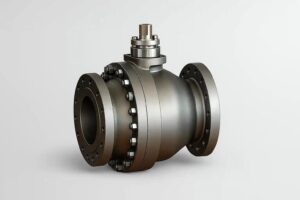
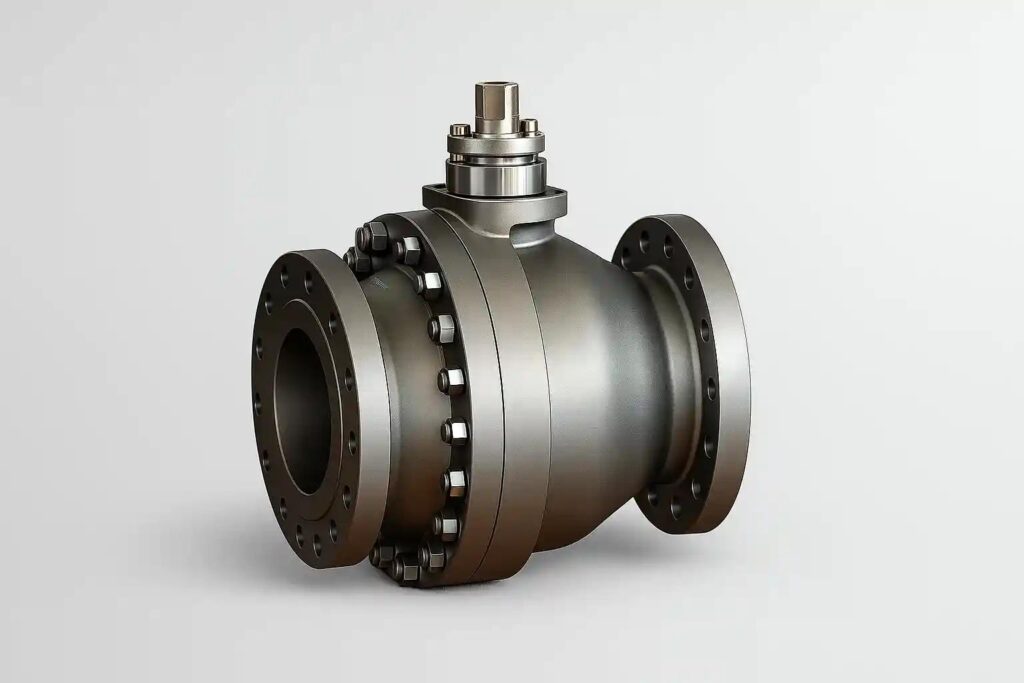
Trunnion ball valves use a fixed ball supported by mechanical anchors at the top and bottom, known as trunnions. Instead of the ball moving under pressure, the seats are spring-loaded and move toward the ball to maintain sealing integrity. This design significantly reduces operating torque and mechanical stress on internal components.
Trunnion designs are preferred in large-diameter pipelines and high-pressure systems where stability and long service life are critical. They are often specified in applications requiring API 6D ball valves, where compliance, safety, and performance testing are mandatory.
Performance and Stability Considerations
Pipeline stability depends on how well a valve handles pressure loads over time. Floating designs concentrate pressure forces on the seats, which can increase wear in demanding conditions. Trunnion designs distribute forces more evenly through the valve body, improving longevity and reducing maintenance requirements.
In systems where consistent isolation is required, both designs may function as isolation ball valves, but trunnion-mounted valves typically offer superior control and reduced wear under high-pressure operation.
Material and Construction Impact
Valve performance is also influenced by manufacturing methods. Forged ball valves are often selected for high-pressure pipeline services due to their superior strength and structural integrity. Forging creates a dense grain structure that improves resistance to fatigue and deformation.
For less demanding applications, cast ball valves provide a cost-effective alternative while still delivering reliable shut-off performance. Selecting the right construction method ensures compatibility with pressure class, temperature range, and pipeline media.
Making the Right Selection
Choosing between floating and trunnion designs is not about which is better overall, but which is better for a specific application. Pipeline size, operating pressure, frequency of operation, and long-term maintenance goals all influence the decision. Selecting the correct design helps ensure that ball valves for pipeline applications deliver consistent performance throughout their service life.
Partner with YDB Valves LLP
At YDB Valves LLP, we engineer pipeline valve solutions with stability, safety, and durability as core priorities. Our product range is designed to support demanding pipeline environments while meeting international performance standards.
We work closely with our clients to recommend valve designs that align with system requirements, pressure conditions, and operational goals. Contact YDB Valves LLP today to discuss your pipeline application and discover how our engineering expertise can support long-term performance and reliability.